
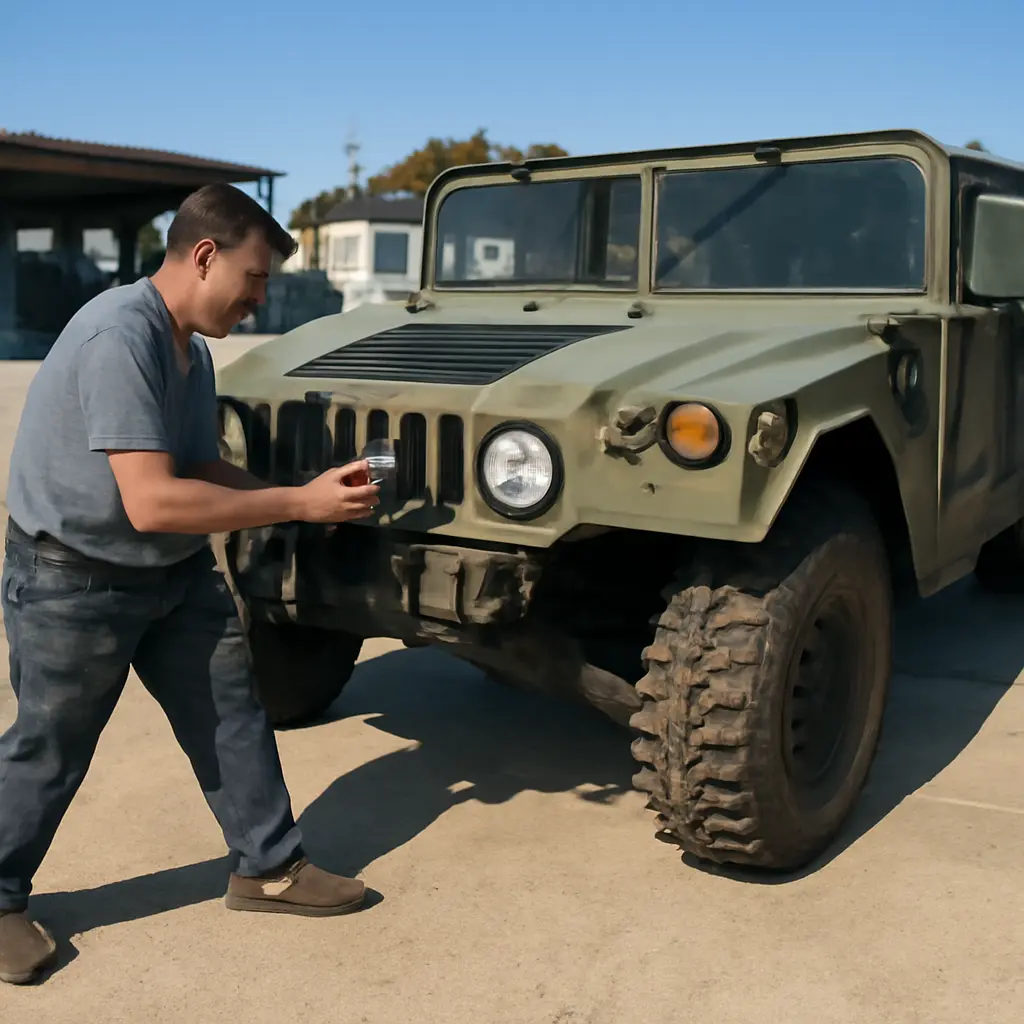
Military vehicle fleet maintenance is the planned inspection, servicing, repair, and management of vehicles and their support systems throughout their service lives. Effective programs combine preventive maintenance, condition monitoring, trained personnel, reliable parts supply, accurate records, and operational feedback. The U.S. Government Accountability Office has repeatedly identified maintenance and parts availability as factors affecting military equipment readiness; its 2019 review of Army and Marine Corps ground equipment also documented continuing challenges in measuring readiness consistently. For fleet managers, the practical goal is to make vehicles safe and available when required while controlling cost, preserving service life, and avoiding preventable failures.
Maintenance practices improve military vehicle fleet readiness
Fleet readiness is the ability of a vehicle population to meet assigned operational demands. The U.S. Department of Defense (DoD) describes materiel readiness through the availability and condition of equipment, while individual services use measures such as mission-capable rates to assess whether assets can perform their intended missions. These measures are useful but should be interpreted alongside safety, maintenance backlog, parts delays, and the type of work required: a fleet-wide average can conceal shortages in a particular vehicle model or unit.
Preventive maintenance and scheduled servicing
Preventive maintenance is planned inspection and servicing intended to reduce the likelihood of failure. It includes checks and tasks set by technical manuals, service schedules, operating hours, mileage, calendar time, and the vehicle’s configuration. Examples include inspecting brakes and steering, servicing filters and fluids, checking batteries and tires, and verifying safety equipment. Operators should complete authorized routine checks, while qualified maintainers conduct tasks requiring specialist tools or technical authority.
A good schedule reflects both manufacturer or service requirements and actual duty. Vehicles exposed to dust, salt, extreme temperatures, heavy idling, or rough terrain may need additional inspection or cleaning. The U.S. Army’s preventive-maintenance system uses technical publications and standardized procedures to guide operator and organizational-level care. Managers should not extend intervals simply to improve availability figures; overdue work can transfer risk into more expensive repairs or unsafe operation.
Condition-based and predictive maintenance
Condition-based maintenance uses observed equipment condition to determine when intervention is needed; predictive maintenance adds analysis of trends or sensor data to estimate developing faults. Depending on vehicle design and data access, useful indicators may include engine diagnostics, fluid analysis, vibration, temperature, battery health, fault codes, and repeated repair history. These methods can help prioritize inspections and reduce unnecessary component replacement, but they supplement rather than override approved technical procedures.
The U.S. Government Accountability Office has noted that military services are pursuing predictive-maintenance capabilities while facing challenges in data quality, integration, and implementation. A sensible rollout begins with a limited set of high-value components, validates alerts against maintenance findings, and tracks false alarms, missed failures, downtime, and cost. Digital tools are most useful when maintainers can access dependable data and have authority, training, and parts to act on it.
Corrective maintenance and failure analysis
Corrective maintenance restores a vehicle or component after a defect is found or a failure occurs. It ranges from minor adjustments to component replacement and depot-level overhaul. Each repair should follow approved technical data, use appropriately qualified personnel, and include verification that the vehicle is safe to return to service.
Recording the failure cause—not just the part replaced—helps distinguish isolated faults from recurring design, operating, training, or supply problems. Maintenance teams can use recurring-defect reviews and root-cause analysis to identify patterns such as contamination, incorrect installation, harsh operating conditions, or inadequate inspection. A repair should be closed only after required inspections, documentation, and functional checks are complete.
Fleet management practices sustain maintenance performance
Maintenance performance depends on more than work performed in the repair bay. Fleet management connects maintenance planning with workforce capacity, parts, technical information, vehicle assignment, and operational demand. The Federal Logistics Information System and service-specific logistics systems support the identification and management of equipment and parts, but local procedures must ensure that records remain accurate and usable.
Maintenance records and configuration control
A maintenance record is the traceable account of a vehicle’s inspections, faults, repairs, component changes, and status. Reliable records let managers identify repeat failures, forecast workload, substantiate readiness reporting, and preserve vehicle history during transfers. They should capture the vehicle identifier, date and operating context, defect, action taken, parts used, labor, inspection results, and return-to-service decision.
Configuration control ensures that a vehicle’s installed equipment, modifications, software, and technical documentation match authorized standards. This matters especially for fleets with multiple variants or mission kits: a procedure or part suitable for one configuration may not apply to another. GAO’s work on weapon-system sustainment emphasizes the importance of reliable data and clear accountability when assessing readiness and sustainment costs.
Parts, tools, and supply-chain resilience
Parts support is the process of forecasting, sourcing, storing, and distributing components needed for maintenance. A vehicle may remain unavailable even when maintainers and repair capacity are ready if a critical part is back-ordered. Managers should use repair and demand history to set stock levels, identify long-lead or high-failure items, manage serviceable and unserviceable inventory, and establish escalation paths for urgent shortages.
The Department of Defense’s 2023 National Defense Industrial Strategy identifies resilient supply chains as a strategic priority, reflecting risks from concentrated suppliers, long production lead times, and disruptions. At the fleet level, resilience can include approved alternate sources, repairable-component programs, careful preservation of stored parts, and visibility into supplier and transportation constraints. Substitutions must remain authorized; an unapproved part can create safety, compatibility, or warranty risks.
Workforce training, safety, and technical standards
Maintenance quality depends on personnel who are trained for the specific vehicle, task, and hazards involved. Training should cover technical procedures, diagnostics, tool use, hazardous materials, lifting and recovery, electrical systems, and documentation. Supervisors should verify qualifications and provide refresher instruction when vehicles, components, or technical publications change.
Safety controls include lockout or isolation where applicable, proper support of raised vehicles, controlled handling of fuels and batteries, personal protective equipment, and independent inspections for safety-critical work. The Occupational Safety and Health Administration’s general industry standards address hazards such as hazardous energy, machine guarding, and chemicals; military organizations must also follow applicable service-specific safety requirements and technical orders.
Maintenance metrics and continuous improvement guide fleet decisions
A maintenance metric is a defined measure used to understand performance and guide action. No single number adequately describes fleet health. Readiness indicators should be paired with measures of reliability, repair speed, repeat work, safety, parts support, and lifecycle cost, with definitions applied consistently across units and time periods.
Useful indicators for fleet managers
A balanced dashboard can include mission-capable or availability rate, mean time between failures, mean time to repair, scheduled-maintenance completion, maintenance backlog age, repeat-defect rate, parts wait time, and cost per operating hour or mile. Each metric answers a different question. For example, availability indicates whether assets can be tasked, while parts wait time can reveal a supply constraint behind low availability.
Metric definitions matter. Managers should specify the reporting period, eligible fleet population, treatment of vehicles in overhaul or reserve, and whether a vehicle is counted as unavailable for parts, labor, or other reasons. GAO’s 2019 report on Army and Marine Corps ground equipment found that the services used different approaches to assess readiness, limiting straightforward comparisons. Standardized definitions and transparent exclusions make trends more credible.
Data review, audits, and corrective action
Continuous improvement is a recurring process of reviewing evidence, identifying causes, testing changes, and checking results. Monthly or quarterly reviews can compare failures by vehicle type, age, location, component, and operating conditions. Findings should result in assigned actions—such as revising a local inspection checklist where authorized, improving training, adjusting stock levels, or referring a recurring engineering issue to the responsible authority.
Audits can check whether records match the physical vehicle, whether scheduled tasks are completed, whether parts are controlled, and whether repairs receive required inspections. Data should be validated before it is used for decisions: incomplete work orders or inconsistent fault codes can make dashboards appear precise while obscuring the underlying problem. Managers should also protect operationally sensitive information and limit system access appropriately.
Lifecycle planning and real-world lessons
Lifecycle planning accounts for maintenance and sustainment from acquisition through retirement. It includes expected usage, modernization, obsolescence, depot capacity, replacement parts, and the costs of keeping older vehicles safe and supportable. GAO’s annual weapon-systems assessments have highlighted sustainment affordability and the need to understand operating and support costs over time.
A practical lesson from military operations is that vehicles deployed to harsh environments need maintenance plans matched to exposure and mission tempo. Dust can accelerate filter and component wear; heat can stress cooling systems and batteries; corrosion can affect electrical connections and structural components. Rather than assume a single interval fits all units, fleet managers should use authorized condition information and documented operating experience to request or implement approved adjustments. A useful visual for a fleet review is a monthly chart comparing availability, overdue scheduled work, and parts-related downtime by vehicle type; plotting these measures together can expose trade-offs hidden in an overall readiness average.
Conclusion: Reliable maintenance protects readiness and service life
Military vehicle fleet maintenance works best as an integrated system: preventive and condition-based practices reduce avoidable failures; corrective maintenance and failure analysis address defects; accurate records, skilled personnel, and resilient parts support enable timely work; and balanced metrics guide improvement. Readiness statistics are valuable, but they should be interpreted alongside safety, reliability, repair delays, and lifecycle cost.
Fleet leaders can strengthen performance by standardizing metric definitions, validating maintenance data, reviewing recurring failures, investing in role-specific training, and identifying supply risks before they ground vehicles. For further guidance, consult current service technical manuals, DoD sustainment policy, GAO readiness and weapon-system sustainment reports, and applicable workplace safety requirements.
Sources: U.S. Government Accountability Office, Army and Marine Corps: Actions Needed to Improve the Reliability and Availability of Ground Equipment, 2019, https://www.gao.gov/products/gao-19-242; U.S. Government Accountability Office, Weapon Systems Annual Assessment, 2024, https://www.gao.gov/products/gao-24-106831; U.S. Department of Defense, National Defense Industrial Strategy, 2023, https://www.businessdefense.gov/docs/ndis/2023-NDIS.pdf; U.S. Department of Defense, DoD Instruction 4151.18, Maintenance of Military Materiel, https://www.esd.whs.mil/Portals/54/Documents/DD/issuances/dodi/415118p.pdf; U.S. Army, Army Regulation 750-1, Army Materiel Maintenance Policy, https://armypubs.army.mil/; Occupational Safety and Health Administration, General Industry Standards, https://www.osha.gov/laws-regs/regulations/standardnumber/1910