
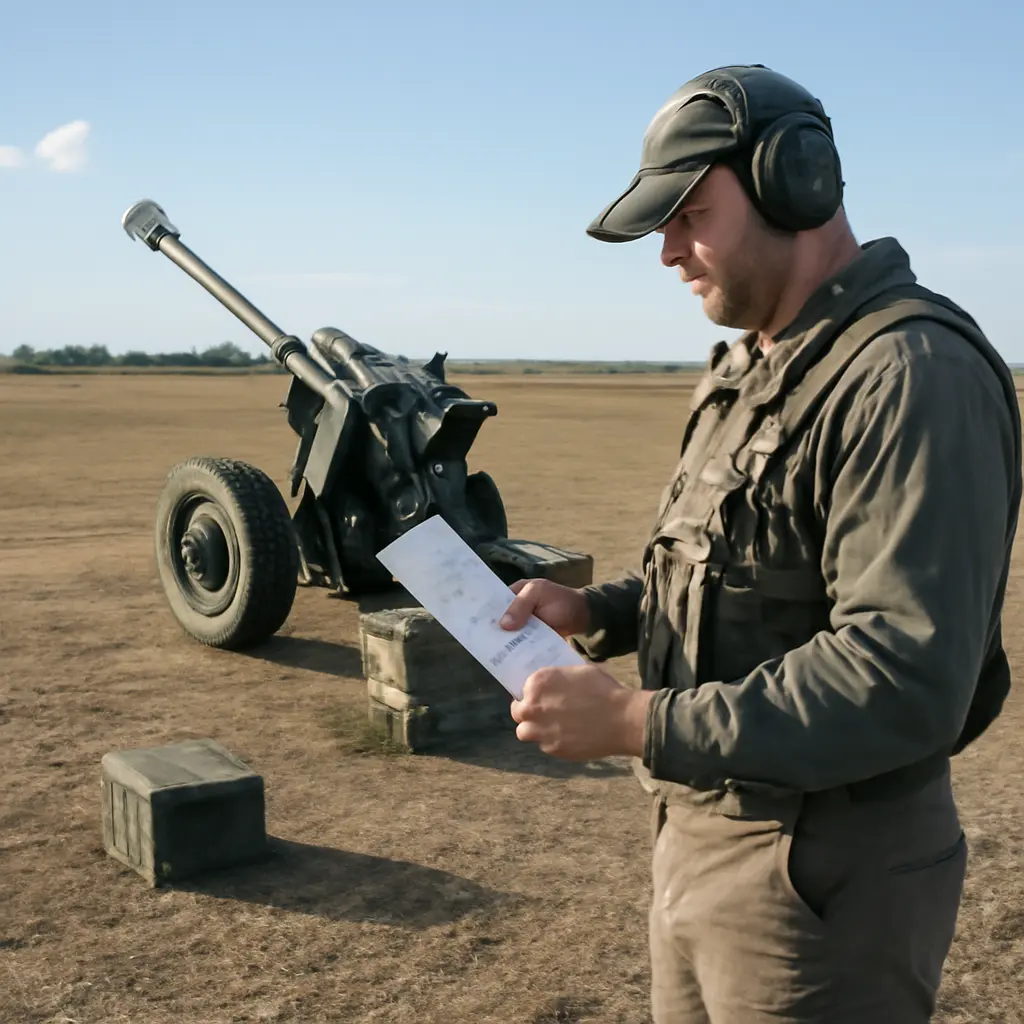
Professional gunners are trained artillery and naval-gunnery specialists who operate weapons, interpret fire-control information, and help deliver accurate fire under demanding conditions. What separates a good gunnery system from a great one is not simply a powerful gun: it is the integration of accurate sensors, reliable communications, disciplined crews, effective fire control, maintainability, and rigorous safety. U.S. Army doctrine treats fires as a coordinated process linking observation, decision-making, delivery, and assessment; meanwhile, publicly available military test reports show why performance must be judged by measurable reliability and effectiveness, not specifications alone. These principles matter because modern systems must work amid electronic interference, fast-changing threats, and pressure to reduce unintended harm.
How professional gunners define a great gunnery system
A gunnery system is the connected set of people, weapons, sensors, fire-control tools, communications, procedures, and support that enables a unit to detect a requirement, make an authorized engagement decision, deliver fire, and assess the result. The U.S. Army’s Field Artillery Manual Cannon Gunnery describes cannon gunnery as a disciplined technical and procedural activity, with accuracy depending on correct data, trained personnel, and consistent application of established methods. This is broader than the gun itself: a technically capable weapon can still perform poorly if its location data are wrong, communications fail, or the crew cannot sustain operations.
In practical terms, “good” often means the system can meet a defined task in favorable conditions. “Great” means it can do so dependably across changing conditions while remaining safe, responsive, supportable, and accountable. The distinction can be understood through several related categories: accuracy and fire control, crew competence, sensor-to-decision integration, reliability and sustainment, and safety and responsible use.
Accuracy and fire control
Accuracy is the closeness of an engagement’s result to the intended point or effect; precision is the consistency of repeated results. A great system seeks both, while recognizing that environmental conditions, equipment variation, target uncertainty, and human inputs can affect outcomes. Army gunnery doctrine emphasizes validated firing data and technical procedures because errors in inputs can propagate through the entire process. For that reason, a strong system uses checks, calibrated equipment, and trained review rather than relying on confidence or a single instrument reading.
Accuracy must also be assessed in context. A test result is meaningful only when the conditions, sample size, and criteria are clear. The U.S. Government Accountability Office has repeatedly cautioned that weapons programs need realistic testing and credible evidence before decision-makers can judge operational effectiveness. A headline accuracy figure without its test conditions is therefore not a complete measure of system quality.
Crew competence and disciplined teamwork
A professional gun crew is a coordinated team whose members understand their roles, communicate clearly, verify critical information, and respond consistently to unexpected conditions. Crew competence is not just speed or familiarity with controls; it includes procedural discipline, situational awareness, maintenance knowledge, and the ability to stop when information is uncertain or safety is at risk. Army training doctrine stresses repeated practice and evaluation so that individual tasks combine into reliable collective performance.
This human dimension helps explain why identical equipment can produce different results in different units. Training standards, leadership, fatigue management, and realistic rehearsal influence how well a crew uses its system. The U.S. Army’s After Action Review process offers a useful example of institutional learning: units compare intended outcomes with observed performance, identify causes rather than assign blame, and apply lessons to future training.
How sensors, decisions, and communications strengthen gunnery systems
A weapon’s effectiveness depends on the quality and timeliness of the information that reaches its crew. Modern gunnery therefore connects observation, command decisions, fire control, and assessment into a broader sensor-to-decision process. The U.S. Army’s Operations doctrine describes fires as coordinated with maneuver and other capabilities, rather than as an isolated technical act. The implication is that a great system must pass accurate information across organizational boundaries without losing context, authority, or accountability.
Target information and situational awareness
Situational awareness is an informed understanding of relevant conditions, including the location and status of friendly forces, civilians, potential hazards, and the intended objective. Sensors can improve awareness, but they do not remove uncertainty: information may be incomplete, delayed, misleading, or affected by environmental and electronic conditions. Professional practice therefore combines sensor inputs with human assessment and established verification procedures.
This principle is consistent with the U.S. Department of Defense’s Law of War Manual, which explains that commanders must take feasible precautions to verify targets and reduce the risk of harm to civilians. A system that provides a technically accurate firing solution but cannot support sound identification and authorization is not a great system. Its quality must be judged by the full decision chain, not by the weapon’s isolated performance.
Communications and interoperability
Interoperability is the ability of people and systems to exchange information and work together effectively. It matters when a gun crew depends on reports or coordination from observers, commanders, adjacent units, or joint and partner forces. Standardized terminology, compatible procedures, resilient communications, and clear authority reduce the chance that a message will be misunderstood or arrive too late.
The NATO Standardization Office describes standardization as a means of improving interoperability among member forces. In practical terms, common procedures can make collaboration more dependable, but they do not guarantee it: equipment compatibility, training, language, and communications resilience still need to be tested. Exercises that expose crews to degraded or disrupted communications can reveal weaknesses that routine, ideal-condition demonstrations may miss.
Why reliability and sustainment distinguish great systems
Reliability is the ability of a system to perform its required function over time; maintainability is how readily it can be inspected, repaired, and returned to service. Sustainment includes the personnel, spare parts, technical support, training, and logistics needed to keep a capability available. These qualities are sometimes less visible than range or firepower, but they determine whether a system can be depended on beyond a short demonstration.
Availability, maintainability, and realistic testing
Operational availability reflects whether equipment is ready for use when required, rather than merely whether it can function under test. A system that performs well once but spends excessive time awaiting repairs, parts, or specialist support may be less valuable than a somewhat less complex system that remains consistently available. The U.S. Government Accountability Office’s annual assessment of major weapons programs tracks development, testing, and delivery challenges, underscoring the importance of examining performance and support over a program’s life cycle.
A useful evaluation should therefore report not only successful demonstrations but also failures, repair times, training demands, and performance across varied conditions. Test and evaluation should be representative of intended use, and results should be transparent enough for decision-makers to understand limitations. The GAO’s work on weapons testing and acquisition provides a recurring reminder: early claims are not substitutes for evidence from operationally relevant tests.
Learning from historical and operational experience
The history of artillery shows that technical improvements become useful only when organizations adapt training and procedures alongside them. The National Army Museum’s account of First World War artillery describes how communications, observation, coordination, and the development of indirect fire changed the role of artillery over time. The lesson is not that any single historical method should be copied, but that system performance depends on how equipment, people, and doctrine evolve together.
Today, after-action reviews and test findings serve a similar function. A unit can identify whether a shortfall came from equipment, information quality, coordination, training, or a mismatch between the task and the system. Treating incidents and near misses as evidence for improvement—while preserving accountability—helps prevent recurring problems and strengthens the whole capability.
How safety and responsibility define professional gunnery
Safety is a core performance characteristic, not an administrative add-on. It includes protecting crews and nearby people, following authorized procedures, maintaining equipment correctly, and ensuring that engagements comply with applicable law and command rules. The International Committee of the Red Cross explains that international humanitarian law requires parties to distinguish between civilians and combatants, take precautions in attack, and avoid attacks expected to cause excessive civilian harm in relation to the anticipated concrete and direct military advantage.
Risk controls and procedural discipline
Risk controls are the procedures, checks, and decision points intended to prevent foreseeable harm. In professional gunnery, they depend on clear responsibilities, reliable information, appropriate authorization, and the willingness to pause when essential facts are uncertain. Checklists and formal verification can reduce avoidable mistakes, but they are effective only when crews understand their purpose and apply them consistently.
The Department of Defense Law of War Manual provides a public reference for legal principles relevant to military operations. It is not a substitute for operational orders or qualified legal advice, but it illustrates why responsible performance includes target verification and feasible precautions. Accordingly, a system should be evaluated not only for whether it can deliver an effect, but also for whether it supports lawful, controlled decision-making.
Measuring performance beyond firepower
A balanced assessment considers mission effectiveness, accuracy, reliability, availability, crew workload, interoperability, maintainability, and safety. No single statistic captures all of these dimensions. A chart comparing system performance should therefore state the test conditions and define each metric; for example, it might show availability alongside reliability and repair time rather than presenting a single “accuracy” score as a complete verdict.
The broader implication is straightforward: professional gunners do not judge greatness by a weapon’s specifications alone. They judge whether a complete, trained, supportable, and accountable system can produce the required outcome consistently under realistic conditions. For further study, readers can consult Army doctrine on field artillery and operations, GAO weapons-program assessments, and public guidance on the law of armed conflict.
Conclusion
Great gunnery systems combine accurate fire control with competent crews, dependable sensors and communications, realistic testing, strong sustainment, and rigorous safety. Army doctrine highlights the coordinated nature of fires; GAO assessments show why performance claims need credible testing; and public legal guidance underscores that effectiveness must include responsible, lawful decisions. Together, these attributes distinguish a system that merely works from one that can be relied upon. The practical next step for organizations and readers is to assess capabilities as integrated systems, ask how published results were tested, and invest in training, maintenance, and lessons learned as seriously as in hardware.
Sources: U.S. Army, ATP 3-09.50, Field Artillery Manual Cannon Gunnery, https://armypubs.army.mil/; U.S. Army, ADP 3-0, Operations, https://armypubs.army.mil/; U.S. Army, Army Training Network, After Action Review resources, https://atn.army.mil/; U.S. Government Accountability Office, Weapon Systems Annual Assessment, https://www.gao.gov/products/gao-24-106831; U.S. Department of Defense, Law of War Manual, https://media.defense.gov/2023/Jul/31/2003271432/-1/-1/0/LAW-OF-WAR-MANUAL-JUNE-2015-UPDATED-JULY-2023.PDF; NATO Standardization Office, NATO Standardization, https://www.nato.int/cps/en/natohq/topics_124879.htm; National Army Museum, The First World War and the Development of Artillery, https://www.nam.ac.uk/explore/first-world-war; International Committee of the Red Cross, What Is International Humanitarian Law?, https://www.icrc.org/en/document/what-international-humanitarian-law