
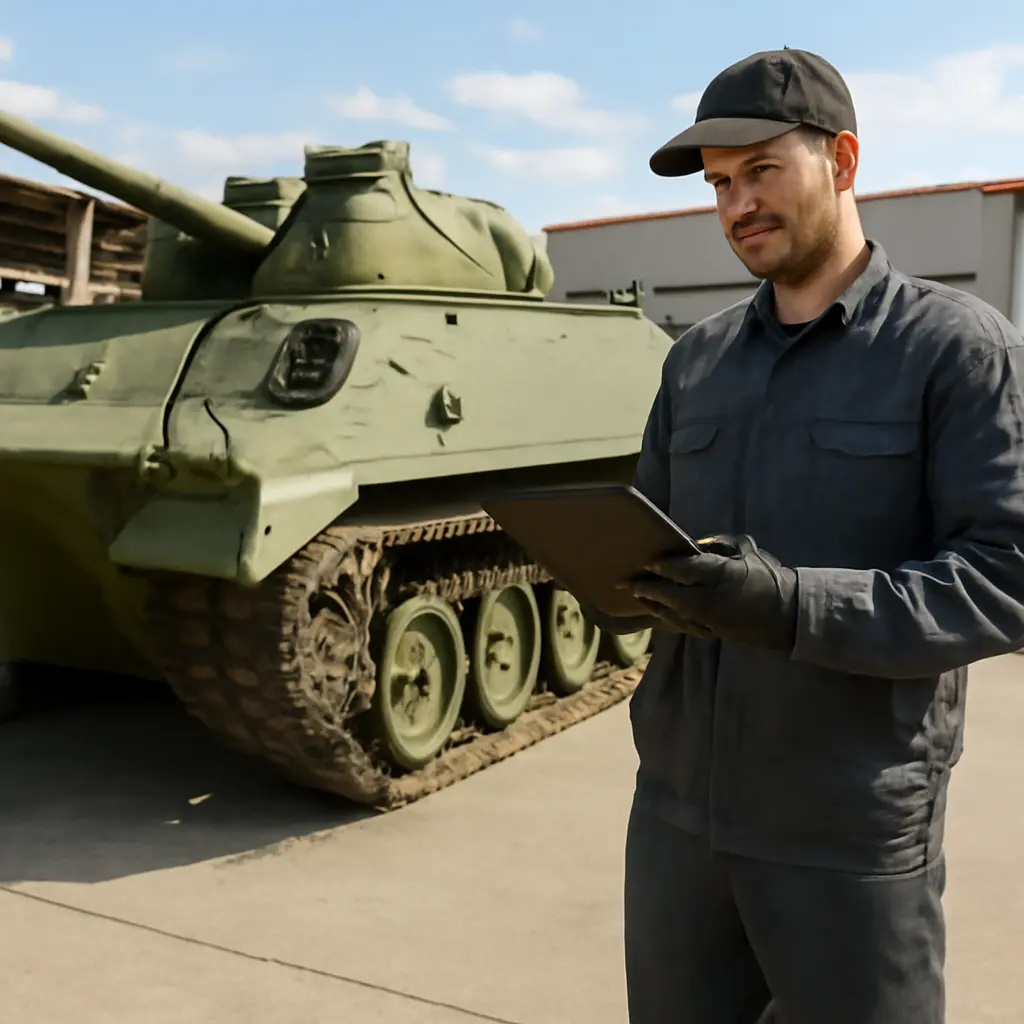
Combat vehicle maintenance tools are the diagnostic, repair, recovery, and safety equipment used to keep military ground vehicles operational in demanding conditions. The tools professionals rely on range from digital diagnostic systems and calibrated torque equipment to track-repair kits, lifting gear, and specialized recovery vehicles. Their value is measurable: the U.S. Army’s published maintenance doctrine treats readiness as a central measure of unit capability, while the Government Accountability Office has repeatedly identified sustainment and parts availability as challenges for major defense equipment. This guide explains the core tool categories, how technicians select and validate them, and what field experience and official guidance show about keeping combat vehicles safe and mission-ready.
Maintenance tools define combat vehicle sustainment capability
A combat vehicle maintenance tool is any instrument, item of equipment, or support system used to inspect, diagnose, service, repair, recover, or verify a military vehicle. U.S. Army technical and maintenance publications describe maintenance as a system of preventive services, fault diagnosis, repair, and recovery—not simply replacing broken parts. In practice, the category includes hand tools, electronic test equipment, lifting and recovery assets, track tools, and technical data systems.
The relevant measure is not how many tools a unit owns, but whether its people can use the right equipment safely and quickly at the appropriate maintenance level. Army doctrine distinguishes operator-level services from field maintenance and sustainment-level repair; each tier needs different skills, facilities, parts, and equipment. The distinction matters because a vehicle that cannot be diagnosed or recovered in the field may consume more time and resources than one with a straightforward repair.
This article groups the most useful equipment by function: diagnostics and inspection, mechanical repair, track and mobility work, recovery and lifting, and digital technical support. Together, these categories form a maintenance toolkit rather than a single “must-have” device.
Diagnostics and inspection tools improve fault identification
Diagnostic tools are equipment and procedures that help maintainers identify a fault, determine its likely cause, and verify the repair. The U.S. Army’s maintenance doctrine emphasizes systematic fault isolation: technicians use observations, test results, fault codes, and technical references to narrow down a problem instead of replacing components by guesswork. That approach is particularly important in modern vehicles, where mechanical, electrical, and electronic systems interact.
Vehicle diagnostic systems and test sets
Vehicle-specific diagnostic systems connect to onboard electronics or test points to retrieve fault information and assess system performance. Depending on the platform, these may include electronic test equipment, interface cables, built-in test functions, and manufacturer- or service-specific diagnostic applications. They can help technicians distinguish a failed component from a wiring, power, or sensor problem.
A diagnostic readout is evidence, not an automatic repair instruction. Maintainers still need the vehicle’s technical manual, the correct test procedure, and a confirmation check after repair. Army maintenance publications stress using authorized procedures and recording faults and completed work in maintenance documentation. This disciplined process reduces the risk of treating a symptom while leaving the underlying cause unresolved.
Inspection instruments: borescopes, meters, and thermal cameras
Inspection instruments reveal conditions that are difficult to assess by sight or touch alone. Borescopes let technicians examine confined spaces; digital multimeters help check electrical circuits; and thermal imaging can reveal unusual heat patterns that may indicate friction, electrical resistance, or a developing component problem. Their usefulness depends on proper training, safe access, and comparison with platform-specific limits.
These instruments complement scheduled inspections rather than replacing them. The U.S. Army’s preventive-maintenance guidance directs operators and maintainers to inspect, service, and report vehicle faults through established procedures. Consistent records help a unit identify recurring defects and decide whether a problem is isolated or part of a broader trend.
Mechanical repair tools support accurate, repeatable work
Mechanical repair tools are the hand and powered equipment used to remove, service, adjust, and install vehicle components. Professionals prioritize durability, fit, calibration, and compatibility with the platform. A tool that fits poorly or is used outside its rating can damage hardware, compromise a repair, or injure the technician.
Torque wrenches and calibrated fastening tools
A torque wrench applies a specified rotational force to a fastener so that joints are tightened consistently. Correct torque is essential on assemblies where clamping force affects safety or reliability, including wheels, suspension components, drivetrain hardware, and engine parts. Maintainers consult the vehicle’s technical instructions for the required value and sequence; there is no universal torque setting for combat vehicles.
Calibration is part of the tool’s usefulness. The National Institute of Standards and Technology explains that measurement traceability depends on a documented, unbroken chain of calibrations, each contributing to measurement uncertainty. In practical terms, units should use approved calibration intervals and remove damaged or out-of-calibration tools from service rather than trusting an unverified reading.
Lifting equipment and safe access gear
Hydraulic jacks, vehicle stands, hoists, slings, and lifting fixtures provide controlled access to heavy components and underbody areas. They must be selected for the load, attachment points, operating surface, and task specified by the vehicle’s technical guidance. Improvised lifting arrangements are especially hazardous because combat vehicles are heavy, unevenly loaded, and often fitted with bulky armor or mission equipment.
The U.S. Occupational Safety and Health Administration’s materials-handling and machine-safety requirements reinforce basic controls such as using rated equipment, inspecting it before use, and keeping personnel clear of suspended loads. In military settings, those safeguards must be applied alongside service-specific procedures and the vehicle manufacturer’s instructions.
Track and mobility tools keep tracked vehicles moving
Track and mobility tools are specialized equipment for inspecting, adjusting, repairing, and replacing the running gear of tracked vehicles. Track systems experience heavy loads and abrasive conditions, so maintainers pay close attention to track tension, pins, bushings, road wheels, sprockets, and suspension components. The exact inspection and adjustment process varies by vehicle model and must follow its technical manual.
Track pins, connectors, and track-repair equipment
Track-repair equipment can include pin-removal and installation tools, track jacks, handling fixtures, and the platform-specific tools needed to join or separate track. These tools make it possible to perform authorized repairs without relying on improvised methods. Because track components are heavy and stored energy can be present, trained crews follow prescribed procedures and use appropriate protective equipment.
A useful maintenance practice is to inspect the full track and running gear rather than focusing only on the visibly damaged section. The U.S. Army’s operator and maintenance manuals provide platform-specific inspection criteria, service limits, and repair steps. Those references are more reliable than generic rules of thumb because track design and adjustment requirements differ among vehicle families.
Portable power and mobility support equipment
Portable power equipment—including approved battery support, lighting, and power tools—helps crews work in dispersed or low-light conditions. The right setup reduces delays when a vehicle is away from a fixed maintenance facility, but power sources and tools must be compatible with the vehicle and the working environment. Electrical safety, fuel handling, ventilation, and fire prevention remain essential considerations.
Mobility maintenance also depends on consumables and replacement parts, not just tools. The Government Accountability Office has reported that defense sustainment challenges can affect the availability of major weapon systems, underscoring why repair capacity, supply planning, and maintenance data must work together. A well-equipped crew cannot complete a repair if the required authorized part is unavailable.
Recovery systems return disabled vehicles to support
Recovery systems are vehicles, winches, cables, rigging, and procedures used to retrieve or move disabled equipment. Recovery is distinct from repair: its immediate purpose is to move the vehicle safely to a location where assessment or maintenance can take place. U.S. Army doctrine treats recovery as a planned maintenance function, with equipment and methods selected according to the vehicle, terrain, load, and operational situation.
Armored recovery vehicles and winch systems
An armored recovery vehicle combines a protected mobility platform with recovery features such as a winch, crane, towing equipment, and, on some models, earthmoving capability. The U.S. Army’s M88 family is a prominent example: the M88A2 Heavy Equipment Recovery Combat Utility Lift and Evacuation System is designed to recover heavy tracked vehicles, including Abrams tanks, within its specified operating limits.
Recovery capacity is not determined by a headline winch rating alone. Crews must account for vehicle weight, slope, ground conditions, cable configuration, anchoring, and the approved recovery procedure. The M88A2’s official Army fact sheet describes its role and system capabilities; operators rely on the applicable technical publications and training for actual recovery planning and execution.
Rigging, towing, and recovery safety
Rigging includes the rated chains, cables, shackles, tow bars, and attachment hardware used to connect recovery equipment to a load. Each item must be suitable for the task and inspected for damage before use. Crews also need clear communication, an agreed movement plan, and exclusion zones to protect personnel from snapped cables, shifting loads, and pinch points.
A historical example illustrates why recovery capability matters: during high-tempo operations, damaged or immobilized vehicles can obstruct routes and consume scarce maintenance capacity if they cannot be moved promptly. Recovery equipment therefore supports both individual vehicle repair and the broader flow of traffic, parts, and maintenance resources. This is a planning function as much as a mechanical one.
Technical data and maintenance records make tools effective
Technical data systems provide the authorized instructions, parts information, fault procedures, and maintenance records that guide tool use. Digital manuals and logistics systems can help personnel find current procedures and document work, but they do not replace qualified judgment or platform-specific technical authority. Their role is to connect the mechanic, the vehicle, the approved procedure, and the supply system.
Technical manuals and configuration control
A technical manual defines approved inspections, service limits, troubleshooting steps, and repair procedures for a specific vehicle configuration. Configuration control matters because upgrades can change components, wiring, diagnostic requirements, and parts compatibility. Maintainers should use the current publication applicable to the vehicle rather than relying on memory or an outdated copy.
The Army’s technical publication system and maintenance forms support standardized work and accountability. Accurate documentation allows supervisors to see what was inspected, what was repaired, and which faults remain. It also helps prevent repeat troubleshooting when a vehicle moves between crews or maintenance levels.
Maintenance data, readiness, and parts planning
Maintenance records turn individual repairs into information that can support fleet-level decisions. Repeated faults may point to a training issue, a component reliability concern, or a supply bottleneck. Readiness measures can help leaders understand the share of a fleet available for assigned missions, but the metric must be interpreted alongside mission requirements, vehicle condition, and reporting rules.
The GAO’s work on weapon-system sustainment highlights the continuing importance of reliable maintenance data and parts availability. For maintainers, that lesson is practical: record faults clearly, use the correct part identification, and communicate supply constraints early. Better information helps maintenance teams prioritize work and helps logistics staff position the parts that are actually needed.
How professionals choose and manage a combat vehicle tool set
A professional tool set is selected around the vehicle fleet, maintenance mission, personnel qualifications, operating environment, and support plan. There is no universal kit that suits every unit. A wheeled tactical fleet, a tracked armored formation, and a depot-level repair facility have different equipment requirements.
- Match tools to authorized maintenance tasks and the technical manuals for the supported vehicles.
- Prioritize diagnostic capability, calibrated measurement tools, safe lifting equipment, and platform-specific repair gear.
- Check that tools are rated, serviceable, compatible, and included in inspection and calibration programs.
- Train personnel in both the tool and the procedure; equipment alone does not establish competence.
- Track tool condition, parts demand, recurring faults, and completed work so the kit evolves with operational experience.
A maintenance program should also account for storage, transport, environmental protection, and access to technical information. These factors often determine whether a tool is usable when needed. For high-risk work—such as lifting, track repair, and recovery—standard procedures and supervision are as important as the hardware.
Conclusion: reliable tools support combat vehicle readiness
The tools combat vehicle professionals rely on serve connected purposes: diagnostic systems identify faults, calibrated mechanical equipment supports accurate repair, track tools preserve mobility, recovery systems move disabled vehicles, and technical data guides safe, documented work. Their effectiveness depends on training, calibration, authorized procedures, parts availability, and maintenance records—not simply on owning sophisticated equipment.
For units building or reviewing a maintenance capability, the best next step is to compare the tool inventory with the supported vehicle manuals, maintenance tasks, and recovery plan, then close gaps through training and sustainment planning. Official Army technical publications, Army recovery-vehicle information, NIST calibration guidance, OSHA safety resources, and GAO sustainment reports provide useful starting points for further research.
Sources: U.S. Army, Army Regulation 750-1, Army Materiel Maintenance Policy, https://armypubs.army.mil/; U.S. Army, Army Techniques Publication 4-33, Maintenance Operations, https://armypubs.army.mil/; U.S. Army, M88A2 Heavy Equipment Recovery Combat Utility Lift and Evacuation System Fact Sheet, https://www.army.mil/; Government Accountability Office, Weapon Systems Annual Assessment, https://www.gao.gov/products/gao-24-106831; National Institute of Standards and Technology, Metrological Traceability, https://www.nist.gov/calibrations/traceability; Occupational Safety and Health Administration, Materials Handling and Storage, https://www.osha.gov/laws-regs/regulations/standardnumber/1910/1910.176; U.S. Army, Preventive Maintenance Checks and Services and vehicle technical manuals, https://www.army.mil/