
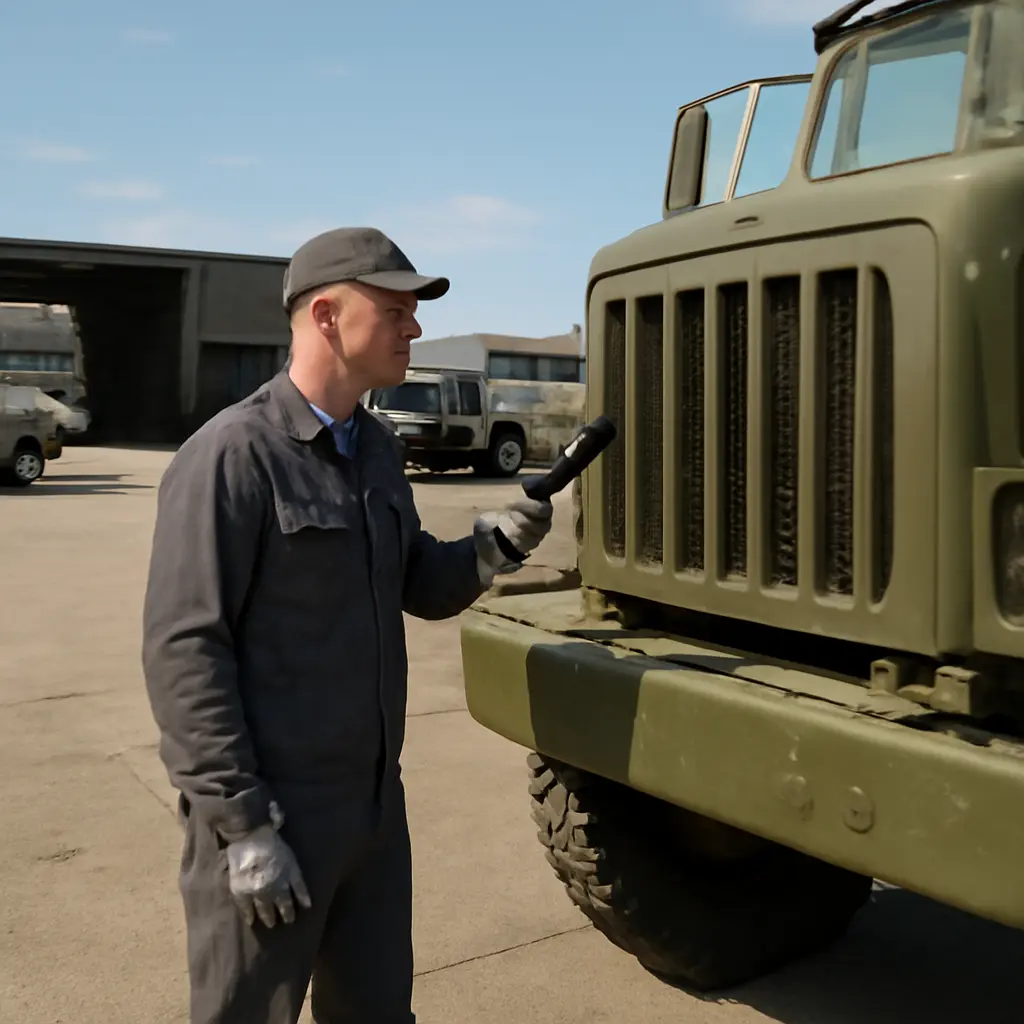
Military vehicle maintenance is the organized inspection, servicing, repair, and documentation used to keep military vehicles safe, reliable, and ready for assigned missions. It combines operator checks, scheduled preventive work, fault diagnosis, corrective repairs, parts management, and quality control. The U.S. Army describes its maintenance system as a readiness function that relies on both unit-level and sustainment-level support; its published maintenance doctrine emphasizes preventive maintenance checks and services (PMCS), accurate fault reporting, and timely repair. This guide explains how those practices fit together, how maintenance differs by vehicle and environment, and how safety, logistics, and records support fleet readiness.
Military vehicle maintenance systems and readiness
A military vehicle maintenance system is the set of people, procedures, tools, facilities, supply channels, and records used to preserve or restore equipment. U.S. Army doctrine, including Army Regulation 750-1 and the Army Techniques Publication on maintenance operations, treats maintenance as a readiness responsibility shared by operators, commanders, and maintenance organizations—not simply a repair-shop activity.
The system commonly includes operator and crew maintenance, organizational-level services, and higher-level repair or overhaul. The exact names, authorities, and work limits vary among armed forces and equipment programs. In the U.S. Army, the commander’s maintenance program, PMCS, technical manuals, fault reporting, and maintenance-management systems connect these levels. A vehicle’s status is meaningful only when inspections, faults, parts, labor, and release decisions are recorded accurately.
Readiness is the operational result, but it is not a single maintenance statistic. Availability, mission-capable rates, safety, repair time, and the ability to sustain operations all matter. Government Accountability Office reports have repeatedly examined the readiness and sustainment challenges affecting U.S. military fleets, showing why maintenance performance must be interpreted alongside fleet age, supply constraints, operating tempo, and mission requirements.
Preventive maintenance and PMCS
Preventive maintenance is planned work intended to detect deterioration or prevent failures before they interrupt service. In U.S. Army practice, PMCS is a recurring inspection and service process performed by operators and maintainers according to the applicable technical manual. Checks may cover fluid levels, leaks, tires or tracks, brakes, lights, batteries, safety equipment, and visible damage, with the actual list determined by vehicle configuration and task.
A sound inspection is more than a box-checking exercise: personnel compare the vehicle’s condition with its prescribed standard, document deficiencies, and report faults through authorized channels. The manual governs what is acceptable and what action is required; improvised repair criteria can miss hazards or cause further damage. For a specific vehicle, use its current approved technical publications rather than a generic checklist.
Corrective maintenance and fault diagnosis
Corrective maintenance restores equipment after a fault is found. It ranges from replacing a serviceable component to complex troubleshooting, repair, or evacuation to a higher-capability facility. Diagnosis should follow approved procedures, use the correct test equipment, and distinguish symptoms from root causes. Replacing parts without confirming the fault can waste scarce inventory and allow the underlying problem to recur.
Maintenance personnel should verify the repair through the checks specified in the technical publication and document the work. If the fault affects safe operation or the vehicle’s authorized status, it must not be returned to service until the responsible authority has determined that it meets applicable requirements.
Maintenance echelons and responsibilities
Maintenance echelons divide work according to skill, equipment, authority, and repair complexity. Operators and crews conduct authorized inspections and basic services; unit maintenance teams handle work within their capabilities; and sustainment organizations or depots perform more extensive repairs, rebuilds, and component work. The division is intended to return equipment to service efficiently while avoiding unsafe or unauthorized repairs.
The practical boundary depends on the service, vehicle, and current maintenance policy. A commander or fleet manager should ensure personnel know who can diagnose, approve, perform, inspect, and release each category of work. Technical publications and service regulations—not assumptions based on a vehicle’s size—define the governing limits.
Military vehicle maintenance by vehicle type
The maintenance system remains consistent in principle, but inspection priorities change with vehicle design and mission. Wheeled tactical trucks, tracked combat vehicles, engineering equipment, and recovery vehicles have different running gear, powertrains, mission systems, and operating stresses. Maintenance plans therefore need platform-specific schedules and technical publications, while common controls—safe work, accurate records, trained personnel, and verified repairs—apply across the fleet.
Wheeled tactical vehicles
Wheeled vehicles require attention to tires, wheels, steering, suspension, brakes, driveline, and vehicle-specific electrical and safety systems. Tire condition and inflation affect handling, heat generation, and load support; inspection and service limits must come from the vehicle manual and tire specifications. Operators should also report abnormal vibration, pulling, brake behavior, fluid loss, or warning indications rather than treating them as routine wear.
Tracked vehicles
Tracked vehicles add track assemblies, road wheels, sprockets, idlers, suspension components, and track tension or adjustment requirements. These systems experience substantial shock and abrasive wear, especially on rough ground. Inspection intervals, measurement methods, adjustment procedures, and replacement limits are platform-specific; incorrect adjustment or handling can damage components and expose maintainers to serious pinch and crush hazards.
Special-purpose and support vehicles
Recovery, engineering, medical, communications, and logistics vehicles combine a base chassis with mission equipment. Their maintenance must cover both the vehicle and its installed systems, such as winches, cranes, pumps, generators, communications equipment, or specialized patient-care fittings. A chassis that runs properly may still be unavailable for its assigned task if mission equipment fails inspection or certification.
Maintenance planning, supply, and documentation
A maintenance plan translates equipment requirements into scheduled inspections, labor, facilities, tools, parts, and downtime. It should account for operating hours or mileage where prescribed, calendar-based services, mission cycles, storage conditions, environmental exposure, and known faults. Planning reduces avoidable disruption, but it does not replace inspections or authorize extending service intervals beyond approved limits.
Technical publications and configuration control
Technical manuals, maintenance work orders, safety notices, and approved change information provide the controlled instructions for inspection and repair. Configuration control matters because vehicles in the same family may differ by modification, equipment fit, or production version. Before work begins, maintainers should confirm that they have the publication and procedures applicable to the actual vehicle configuration.
Parts, tools, and repair capacity
Parts availability and repair capacity strongly influence how long a vehicle remains unavailable. Effective supply management links a validated fault to the correct part, tracks demand and delivery, and avoids substituting components that are not authorized. GAO has reported that supply-chain and sustainment challenges can affect the availability of major U.S. weapon systems; the same broad lesson applies to ground fleets, where a small, unavailable component can delay a larger repair.
Maintenance leaders can monitor measures such as time awaiting parts, repair turnaround time, repeat faults, overdue services, and the share of faults cleared on first repair. These indicators are useful only when definitions and reporting practices are consistent. A low backlog, for example, does not prove readiness if faults are underreported or vehicles are not being inspected thoroughly.
Maintenance records and data quality
Maintenance records preserve a vehicle’s service history, outstanding faults, completed work, parts used, and inspection results. Accurate records support safety decisions, warranty or contract actions, trend analysis, inventory planning, and handoffs between units. Digital systems can improve visibility, but only if users enter timely, complete, and correctly coded information and if access and data handling follow applicable policy.
Safety, environment, and operating conditions
Military vehicle maintenance involves heavy components, stored energy, hot surfaces, hazardous fluids, batteries, and sometimes specialized systems. Risk controls should be built into the job plan: secure the vehicle, control movement and energy sources, use rated lifting and support equipment, wear required protective equipment, and follow the technical manual and local safety procedures. Only trained and authorized personnel should perform work on systems requiring special qualifications.
Safe maintenance practices
Before starting work, identify hazards and confirm the correct vehicle, tools, parts, and procedures. Use approved lifting points and stands, keep personnel clear of suspended loads, and control batteries, electrical circuits, pressurized systems, and rotating parts as directed. After work, account for tools and materials, reinstall guards and safety devices, and complete required inspections before releasing the vehicle.
Harsh environments and corrosion control
Dust, mud, salt, humidity, temperature extremes, and long-term storage can accelerate wear or corrosion and affect filters, seals, electrical connections, lubricants, and underbody components. Maintenance schedules and preservation requirements should reflect the vehicle’s approved guidance and actual exposure. Cleaning, drying, corrosion inspection, and correct storage preparation help protect equipment, but cleaning methods must not damage sensors, coatings, or electrical systems.
Environmental compliance and waste handling
Used oils, fuels, coolants, batteries, solvents, and contaminated materials require handling under applicable environmental and safety rules. Maintenance facilities should prevent spills, segregate waste correctly, and use designated collection and disposal channels. The U.S. Environmental Protection Agency’s hazardous-waste framework is one relevant U.S. reference, but military installations may also be subject to additional federal, state, local, and service requirements.
A practical maintenance workflow
A disciplined workflow connects inspection to verified return to service. The sequence below is a general management aid, not a substitute for the vehicle’s technical manual, service policy, or safety rules.
- Confirm the vehicle identity, configuration, assigned task, and applicable technical publications.
- Perform the prescribed inspection and record symptoms, measurements, warnings, and visible defects.
- Classify the fault and determine whether the vehicle may operate, requires restriction, or must be removed from service under applicable rules.
- Assign authorized personnel, tools, parts, facility space, and any required safety controls.
- Diagnose the cause and perform only approved repairs within the team’s authority and capability.
- Inspect and test the completed work using the prescribed acceptance checks.
- Update maintenance records, communicate unresolved faults, and release the vehicle only through the required authority.
- Review recurring faults and delays to improve training, planning, supply support, and preventive actions.
Conclusion: maintenance as a readiness discipline
Military vehicle maintenance is a connected readiness system: PMCS detects problems, corrective maintenance restores function, maintenance echelons assign work appropriately, and technical publications, parts, records, and safety controls make the process dependable. Vehicle-specific requirements differ, but accurate reporting and verified repairs are essential for wheeled, tracked, and special-purpose fleets alike.
The broader implication is that readiness depends not only on mechanics but also on leadership, training, supply chains, facilities, and reliable data. Units and fleet managers should consult current service regulations and platform manuals, review maintenance trends, and strengthen reporting and safety practices. For further reading, begin with the applicable service maintenance regulation, the vehicle’s current technical publications, and relevant GAO sustainment assessments.
Sources: U.S. Department of the Army, Army Regulation 750-1, Army Materiel Maintenance Policy, https://armypubs.army.mil/; U.S. Department of the Army, ATP 4-33, Maintenance Operations, https://armypubs.army.mil/; U.S. Government Accountability Office, Weapon Systems Annual Assessment, https://www.gao.gov/weapon-systems-annual-assessment; U.S. Environmental Protection Agency, Hazardous Waste, https://www.epa.gov/hw